If you’re wondering how Fliff, the leading sweepstakes sportsbook in the sweeps gaming industry, will respond to California outlawing sweeps gameplay on Jan. 1, wonder no longer.
Fluff users woke up in 2026 to a new gaming option …
Superstars.
It’s a real-money, peer-to-peer daily fantasy sports product that mirrors the pool-based formats popularized by operators such as Underdog and PrizePicks. It represents a new course for Fliff in the post-California Assembly Bill 831 world, and it’s a course that combines innovation and what feels like also some defensive maneuvering.
At launch, Superstars is live in 11 states: California, Utah, New Mexico, North Dakota, South Dakota, Kansas, Minnesota, Kentucky, West Virginia, South Carolina, and Rhode Island. On paper, that list may suggest an expansion play. And that could be true.
But with the context of timing, how Superstars launched the day sweeps sports betting went offline in the most important market for the sweeps industry, Superstars can also be perceived as Fliff’s workaround for and response to AB831 — a way to keep monetizing a massive market that has just slammed the door on sweepstakes-style sports betting.
What the launch of Superstars means
There are a few reasons for that educated speculation.
One, the competitive outlook for entry into the DFS landscape is murky at best.
DFS is a crowded, mature space dominated by well-capitalized brands with years of product refinement and deep customer databases with entrenched habits and preferences. Taking any type of meaningful market share from the likes of Underdog, PrizePicks, Sleeper, and similar platforms is a tall order for any newcomer, let alone one seemingly arriving under regulatory pressure rather than organic market demand.
There’s obviously a counter to that point, though.
Fliff may be confident there’s a significant overlap between its existing sweepstakes sportsbook audience and DFS players. And that’s a fair thing to be confident in — that sweeps-and-DFS customer overlap very likely does exist.
But that overlap has already existed for years. DFS has long been operating nationally in a legal gray zone, meaning interested Fliff players almost certainly already have accounts with established DFS operators. And if that’s true, there is likely little reason for those DFS players to abandon playing habits and switch, except for potentially any Fliff players who love the user interface of Fliff more than any other DFS app and are happy to switch their DFS gameplay to their favorite platform.
Assuming all this speculation is accurate, and considering the timing of Superstars’ launch, Fliff’s new DFS offering is, at least in part, almost certainly also a revenue preservation tactic in California.
How Fliff’s reaction compares to other sweeps operators
Fliff’s reaction to California’s closure is just one of a wide range from sweeps gaming sites.
Some have responded by re-opening their platforms in states where they were previously offline. Spree, for example, resumed operations in Alabama and Georgia, while Baba Casino and ACE Casino relaunched in several additional states. The likely goal? Recoup as much anticipated lost revenue from California as possible.
A number of smaller operators shut down entirely. Vivaro.us was among the most transparent, telling players it was permanently closing due to mounting regulatory uncertainty around sweepstakes casinos in the United States.
Now, with AB831 officially becoming law on Jan. 1, the more recent wave of reactions have shifted from triage to adaptation.
At a minimum, nearly all major operators have kept Gold Coin gameplay (or, for Fliff, Fliff Coin picks) live in California.
Modo.us introduced Modo Stars, a loyalty-based rewards ecosystem allowing players to earn Modo Stars via Gold Coin gameplay and eventually redeem those Modo Stars for Gold Coin packages (that come with Sweeps Coins) or Rewards, which come in the form of perks like hotel stays, cruise packages, etc. (Important to note, however: There are no Sweeps Coins in states such as California and New York, though, where Sweeps Coin gameplay is banned, so those Gold Coin packages would only come with Gold Coins.)
MyPrize.us shifted toward prediction markets through a partnership with Crypto.com, even though the product has yet to go live.
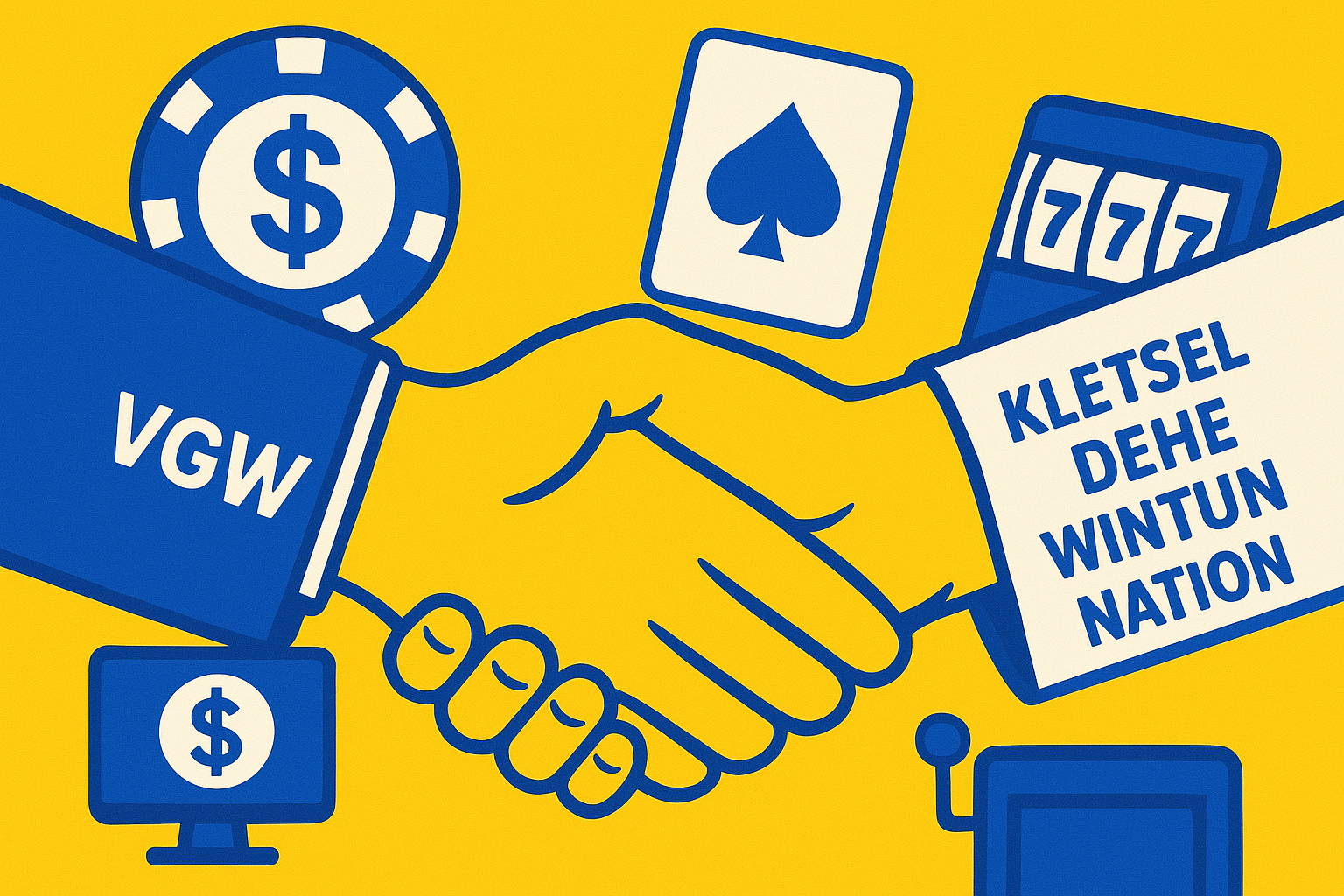
VGW, by contrast, is focusing on scale and efficiency rather than structural change. It recently launched LuckyLand Casino, plans to debut United Slots this quarter, and is consolidating its brands onto a single technology platform.
Then there are the more unconventional responses. ClubWPT Gold abandoned the familiar dual-currency model in favor of a single redeemable currency tied to poker education products, positioning itself as much as a learning platform as a gaming one.
Most recently, Card Crush has emerged with a hybrid model that blends RPG-style card game battles with casino-style games. Live only in California and New York, it uses these RPG card games as an engine to drive players to earn or purchase Mystery Boxes, which come with, among other things, Mystery Coins — a single currency that can be used to play casino-style games that also exist on the site and can also be redeemed for cash.
When looking at the industry as a whole, if Superstars was in any part designed as a response to California shutting off sweeps gameplay, as we speculate it was, it’s actually one of the more straightforward and logical approaches we’ve seen thus far.