Florida lawmakers have filed an 86-page gambling bill that would criminalize internet gambling and reinforce the Seminole Tribe’s exclusive control over the state’s online gaming market, drawing immediate pushback from the sweepstakes casino industry.
House Bill 591, filed December 2 by Rep. Jacques for the 2026 legislative session, defines “Internet gambling” as any game “in which money or other thing of value is awarded based on chance, regardless of any application of skill, that is available on the Internet and accessible on a mobile device, computer terminal, or other similar access device and simulates casino-style gaming, including, but not limited to, slot machines, video poker, and table games.”
The bill makes operating, conducting, or promoting internet gambling a third-degree felony. The measure explicitly exempts gaming activities conducted under the Seminole Tribe’s compact with the state.
The legislation also prohibits gambling advertisements, preempts local governments from regulating gambling activities, and creates new penalties for trafficking in slot machines—a first-degree felony carrying fines up to $500,000. The bill has a companion measure in the Senate, SB 204, and would take effect on October 1, 2026.
SGLA responds with a similar approach to California
The Social Gaming Leadership Alliance, a trade group representing sweepstakes operators, criticized the bill’s scope.
“We strongly disagree with the categorization that Social Plus games that utilize sweepstakes promotions have anything in common with illegal offshore gambling operations,” said Jeff Duncan, SGLA’s executive director, in a statement. “HB 591 laudably seeks to stop illegal gambling from taking place in the state of Florida but fails to account for how lawful promotional sweepstakes operate in Florida.”
Duncan said SGLA partner companies “operate fully within Florida’s sweepstakes, consumer protection, banking and financial transactions laws” and remain “committed to further regulations to ensure that Social Plus games remain a safe outlet for the millions of Florida adults age 21 and over seeking casual entertainment.”
The statement reflects the industry’s broader argument that sweepstakes platforms should be regulated rather than prohibited.
An economic impact report released by Eilers & Krejcik Gaming, commissioned by SGLA, projected that sweepstakes operators would generate $1.04 billion in Florida player purchases in 2025, representing approximately 8.5% of nationwide revenue. The report argued Florida could collect more than $70 million annually through a proposed $270,000 annual license fee per brand and a 6% tax on player purchases.
A renewed push for the 2026 legislative session
The legislation follows failed attempts earlier this year. Senate Bill 1404 and House Bill 1467, which sought similar restrictions on internet gambling, died in committee during the 2025 legislative session.
Florida’s gaming market operates under a 2021 compact with the Seminole Tribe that grants the tribe exclusive rights over casino gaming and online sports betting. The compact guarantees the state a minimum of $2.5 billion over its first five years.
Gaming attorney Daniel Wallach noted that “Florida law already treats sweepstakes-casino models as prohibited gambling under existing statutory and constitutional language.”
“With constitutional limits, tribal exclusivity and legislative momentum aligned against expansion, analysts say legalization of sweepstakes casinos in Florida remains unlikely unless voters amend the constitution and the Seminole Tribe renegotiates the compact.” https://t.co/YV3y92zVmC
— Daniel Wallach (@WALLACHLEGAL) December 3, 2025
The next big state after California and New York
Florida’s bill arrives as other large states have moved to ban sweepstakes casinos outright.
California Governor Gavin Newsom signed AB 831 into law on October 11, banning sweepstakes casinos effective January 1, 2026. The California law explicitly targets platforms using “dual-currency” systems—the model most sweepstakes casinos employ—and passed without a single opposing vote.
In New York, Senate Bill 5935 awaits Governor Kathy Hochul’s signature, with a December 31 deadline. That measure, which passed the Senate 57-2 in June, similarly targets dual-currency systems and would grant the New York State Gaming Commission authority to define and enforce the prohibition.
Unlike the California and New York bills, Florida’s HB 591 does not explicitly reference “dual-currency” systems or use the term “sweepstakes.” Whether its broader definition of internet gambling would reach sweepstakes platforms that award prizes redeemable for cash remains a question.
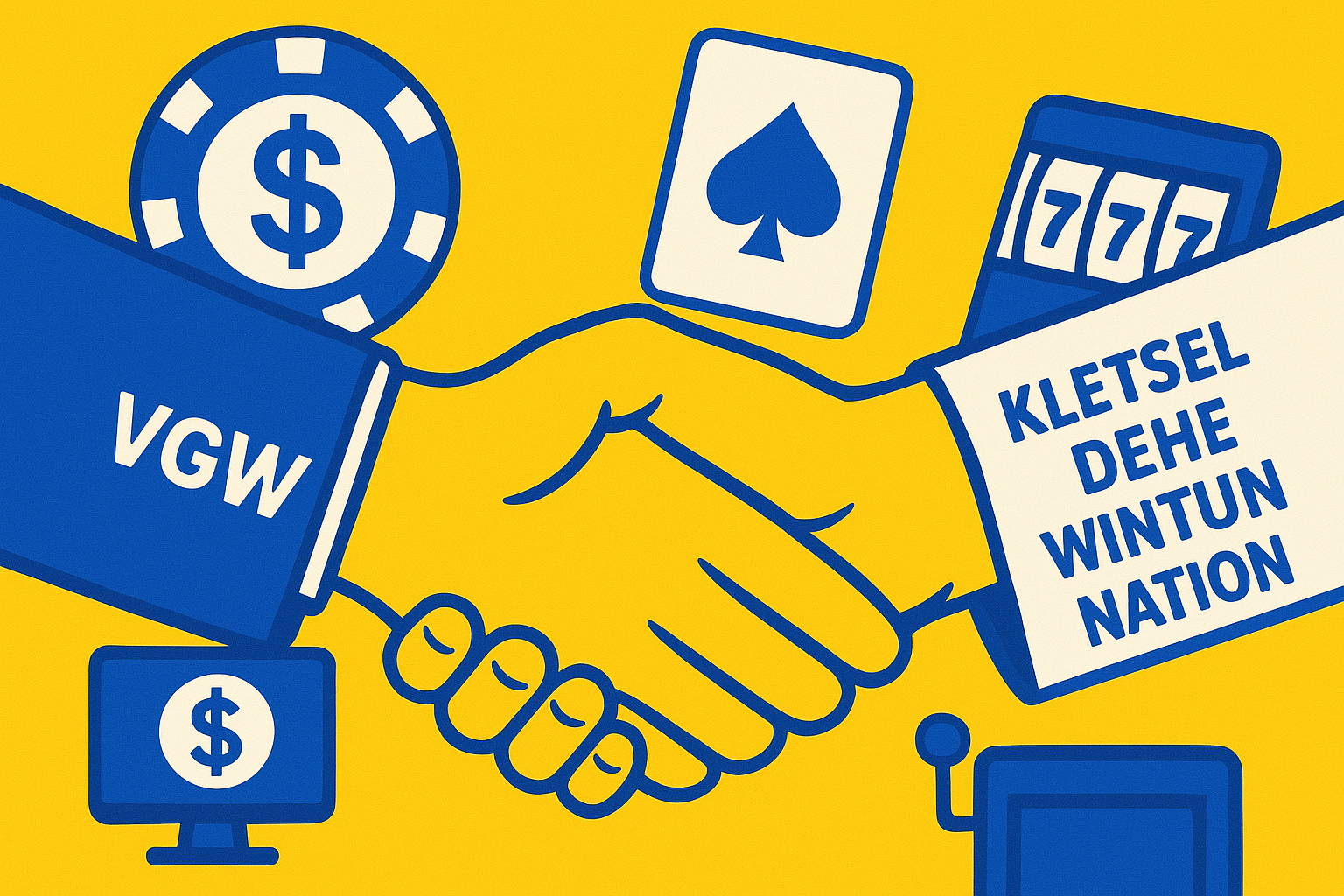
Despite the headwinds, the sweepstakes casino market continues to expand. The industry has grown from roughly 25–30 sites to more than 200 active platforms in 2025. Industry leader VGW recently confirmed it is launching LuckyLand Casino, a new full-scale social plus platform—an expansion that signals the largest operator has weathered the challenges of a turbulent year.
HB 591 has been referred to committee. The 2026 legislative session begins in March.