

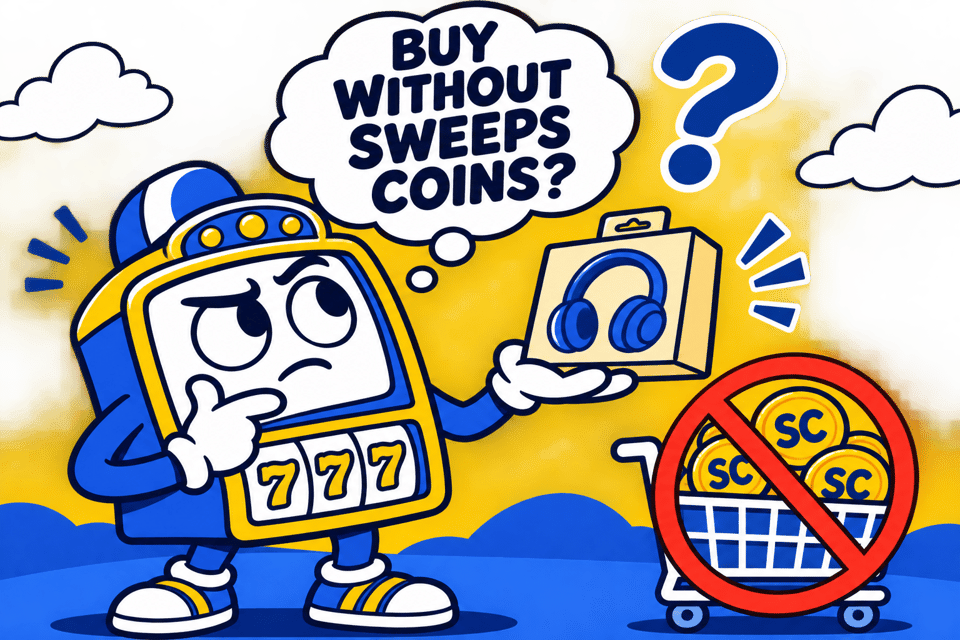
As states, regulators, and attorneys general continue to go after the dual-currency model, sweepstakes casino operators have pivoted in many different directions, including single-currency models, subscriptions, surveys, rips, and others.
Two of those other strategies have caught our eye lately.
One is surface level: Some operators are simply renaming Gold Coins.
One is foundational: Others are tying Sweeps Coins to the sale of real goods.
To break things down further, Sweepsy spoke with Josh Kirschner, Deputy Team Leader for Holland & Knight’s Gaming Practice, who described the two approaches as very different answers to the same legal pressure.
Rename the Gold Coins
Over the past couple of months, a handful of operators have dropped the "Gold Coins" label for their non-redeemable currency. Most notably, High 5 Casino now calls its coins Game Coins.
The Sweeps Coins side of the platform, meanwhile, stays the same.
Why would that matter? Because, Kirschner said, the waves of enforcement against sweeps "are all very expressly calling out the sale of Gold Coins" as a purchase that allegedly only exists only to deliver Sweeps Coins.
So it's not surprising, he said, that some operators would try distancing themselves from that language. Simply put: A lawmaker or regulator might be less likely to see a currency with a different name as part of the classic dual-currency model.
"I'm sure there are companies out there who are thinking, ‘OK, if we just change the name of Gold Coins to something else, perhaps that will lessen the pressure on us,’" Kirschner said.
Sell something real
The second strategy is the one Kirschner is keeping his eye on in particular, and it goes well beyond a name change.
As Sweepsy has reported, operators like AceBet have started selling actual products, such as physical card packs that ship to customers, with Sweeps Coins attached as a bonus. That approach has opened up play in states like California and New York, where dual-currency sweeps gaming is banned.
"What they are actually doing is moving toward a model where you are getting an actual bona fide good or service,” Kirschner said.
That matters because of how sweepstakes have always been allowed to exist under state law.
"So in some of these cases where you see the name of that front-end currency being changed, you're actually seeing these companies doing what they can to comply and stay within the state carve-outs to gambling that say a bona fide sale of a good,” Kirschner said, “to which a sweepstakes entry is incidental — is an appropriate sweepstakes.”
In other words: State laws haven't stopped allowing sweepstakes. They've stopped allowing a Gold Coin purchase that exists to deliver Sweeps Coins. Selling a real product, with sweepstakes entries as a genuine add-on, is a way to stay inside the law.
Or at least that’s what operators are hoping.
'It doesn't have to be physical product'
Physical goods are one route, but not the only one.
"It can be a service," Kirschner said. "It doesn't have to be a physical product."
He pointed to the kind of digital currency people buy to pay for an AI agent as an example. It's called a coin and works like a currency, but no one is buying it as a back door to Sweeps Coins.
"That is ostensibly a currency," Kirschner said. “But that is a real bona fide good or service in its own right, even if it still has the word 'coin' in it."
The test, in other words, isn't what an operator calls its product. It's whether the product is something people actually want. In legal terms, this is called the but-for test.
The but-for test: 'This is where the slope gets kind of slippery'
Digital packs, though, are harder to classify.
"This is where the slope gets kind of slippery," Kirschner said. "How do you differentiate between a bona fide good that has independent value, and a [sham] good or currency that's only being sold to push through sweeps cash?"
He offered a hypothetical: "Can you say, ‘Look, we're selling digital cards that you can then use to participate in battles with each other and [work] your way up the leaderboard?’ Is there independent desire, utility, value in that good? And how do you make that mesh?"
Gold Coins, of course, were once defended along similar lines. But Kirschner said regulators see them as failing a basic test — the but-for test.
"[They] don't have independent value," he said. "[No one] independently desires these things, and [they] fail the but-for test. But for the presence of sweepstakes entries, would anyone buy this good?"
That test isn't unique to gaming law.
"It's a real, classic, first-year-of-law-school torts liability test. It’s where it comes from," Kirschner said. "But it's used all over. If you go dig through case law and take your pick of your favorite subject, you'll see but-for tests all over the place."
Whether regulators and courts will accept physical or digital goods as truly bona fide offerings from sweeps casinos remains to be seen. The but-for question, as Kirschner framed it, may be the one that decides it.